Why service pages are important for local businesses
A service page performs a key role: it ought to help a prospective customer quickly grasp what you offer, whether it matches their need, and what action comes next. Once that information is easy to follow, the page can assist both local discovery and better enquiries.
For a lot of local businesses, a website visitor is not searching for a lengthy company introduction. They might have a particular problem, a service already in mind, or a choice to make. A tightly focused page gives them a direct path from search to useful detail, and from detail to action.
That is the real purpose of local service page SEO. It is not just a matter of placing a service title on a page. It means structuring the page around genuine customer questions, making local relevance easy to understand, and building a straightforward route to an enquiry. Search-friendly organisation and a helpful customer journey should reinforce each other, not compete for attention.
At Web Design Business Builder, local marketing is considered as part of a joined-up website foundation, together with strategy, design, functionality and ongoing care. This method helps make sure that service coverage, conversion signals and next steps are accounted for before they turn into rushed additions.
Begin with clear service coverage
A visitor should never be left wondering whether your business offers the service they need. Give every meaningful service enough room to explain what it does, who it serves and how a customer can continue. That improves usability and supports a more sensible search structure.
Use the wording customers are likely to recognise first. A straightforward service name, paired with a brief explanation, is often more effective than vague promotional language. After that, expand the detail in a way that addresses the questions a serious visitor may have.
Include the information customers need to judge fit
A clear description: set out the service and the situation it is meant to help with.
Relevant scope: explain what the service includes, without making the page unclear or overloaded.
Who it is for: help visitors see whether the page speaks to their needs.
Useful next steps: indicate what happens if someone wants to ask a question or start a conversation.
Clear coverage also strengthens the rest of the website. Navigation can direct visitors to the right service, related pages can support the customer journey and the business can present its offer more consistently. Before visual choices are made, strategy and positioning can help define the offer, audience, messaging and page plan that service pages require.
Make location relevance feel natural and useful
Local relevance matters because nearby customers want to know that a business serves their area and understands the context in which they are searching. The best location signals are useful to people first. They explain where the business operates, how service availability relates to a customer’s needs and how to make contact.
A location should not be repeated in every sentence. Doing so can make the copy seem less trustworthy and less helpful. Instead, include location details where they answer a real question: in service-area information, in an explanation of how the business works with local customers, or beside contact details and next steps.
Ways to add local context without forcing it
Mention the towns, areas or region you serve when that detail helps customers decide whether to enquire.
Write service descriptions that reflect the needs and language of the business’s local audience.
Keep service, location and contact details consistent across the website.
Make it simple for visitors to move from a service page to a relevant conversation.
Location relevance works best when it sits inside a clear overall structure. A website with linked services, logical pages and visible next steps gives visitors and search engines more context than a set of separate, thin pages.
Use a page structure that helps scanning and decision-making
People often skim a service page before reading it in full. Headings, short sections and purposeful lists help them find the information that matters fast. That does not mean turning every page into a checklist; it means arranging the content in the order a customer uses when deciding.
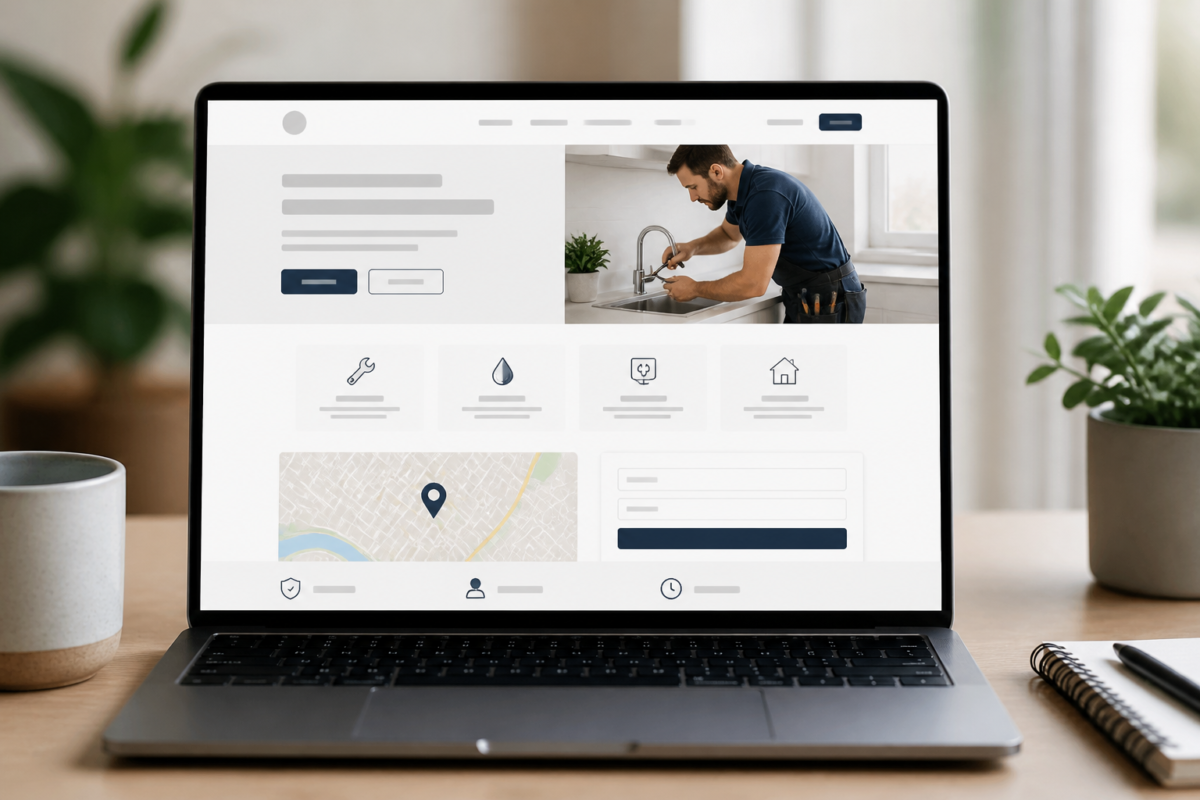
A useful page often starts by confirming the service and the problem it solves. From there, it can explain the approach, give relevant proof, answer practical questions and finish with a next step. The exact sequence may change, but the journey should still feel intentional.
A practical service page sequence
Confirm the service: use a direct heading and opening explanation so visitors know they are in the right place.
Explain the value: describe what the service helps customers achieve or understand.
Add meaningful detail: cover the process, scope, considerations or common questions that make the page useful.
Provide proof in context: place relevant evidence near the claims or decisions it supports.
Show the next action: offer a clear, low-friction route to contact the business.
This structure also gives conversion-ready design a stronger base. Helpful interactions should reduce friction instead of adding clutter, while accessible, fast and maintainable website foundations help the page stay useful over time.
Put proof where visitors need reassurance
Service pages are often pages where decisions are made. A customer may be weighing options, trying to understand a specialist service, or deciding whether a business feels credible enough to contact. Proof can help, but it should be relevant and handled carefully.
Depending on what the business can honestly show, proof may take the form of reviews, credentials or examples of actual work. Context is the crucial part. A broad claim of confidence is less valuable than evidence that helps a visitor understand why the service, approach or business is a suitable option.
Do not include proof merely to fill space. Select details that support the page’s main point and present them truthfully. This builds trust while keeping the content centered on the customer’s decision.
Make calls to action direct and specific
Even a useful page can lose momentum if the next step is not visible. A call to action should tell visitors what they can do and set a reasonable expectation for what follows. On a service page, an explicit invitation to discuss requirements, ask a question or plan a project can be more helpful than a generic button without context.
Calls to action work best when they appear at natural decision points: after the introduction for ready visitors, after detailed information for those seeking reassurance, and near the end for people who have read the whole page. The wording should fit the page’s purpose and the level of confidence a visitor is likely to have.
For instance, a business can ask visitors to share what they are planning, where customers run into friction, and what the website needs to achieve. That makes the contact step a practical conversation instead of a vague sales exchange.
Keep pages useful as the business evolves
Service pages should not be treated as permanent and unchanged. Offers shift, customer questions develop and new opportunities may make a page clearer or more complete. Regular review helps keep service coverage accurate, proof up to date and next steps matched to the way the business operates.
That is where a connected approach matters. Local marketing can build on search-friendly page structure and conversion foundations, while website care can support practical updates, maintenance and content changes after launch. The aim is a website that stays clear for customers and useful for the business behind it.
Bring visibility and enquiries together
A string service page does not separate being found from being understood. It gives local customers a clear explanation of the service, shows relevant local context, offers reassurance at the right moments and makes action easy. Those elements help build a more credible route from attention to enquiry.
If you want to plan service pages around your offer, audience and customer journey, start a conversation with Web Design Business Builder. Share what your website needs to help the business achieve, and the discussion can begin with clear priorities and practical next steps.